
Persian Cat Breeds: Types, Faces and Colors (With Pictures)
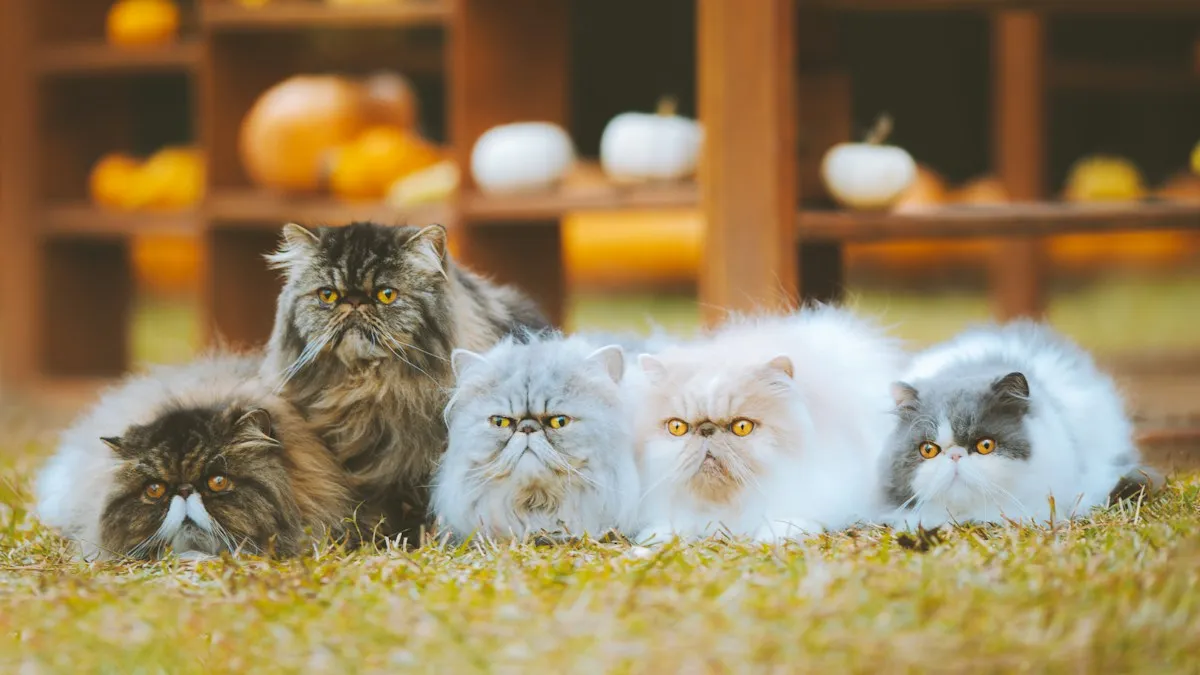
Persian cat breeds are not separate breeds at all. They are one long-haired breed split by face shape, size and color. This guide explains every type, from the doll face to the peke face, so you can tell them apart and choose the right kitten.
How Many Types of Persian Cats Are There?
There is only one Persian breed, but people sort it in three practical ways. That is why one website says there are three types and another says there are seven.
So when someone asks how many types of Persian cats are there, the honest answer is three face types, seven color groups and a handful of popular variants. All of them share the same round head, small ears, big eyes and famously relaxed personality.
Types of Persian Cat Faces
Face shape is the biggest difference between Persian cat breeds. It affects looks, breathing, eye health and even price, so it is worth understanding before you buy.
The quickest way to judge a face is to look at the nose from the side. On a doll face, the nose sits clearly below the eyes. On a modern Persian, like the cream cat in this photo, it sits level with the eyes. On a peke face, it is pushed even higher.
- Longer nose = easier breathing
- Flatter face = more eye cleaning
- Flatter face = more show wins
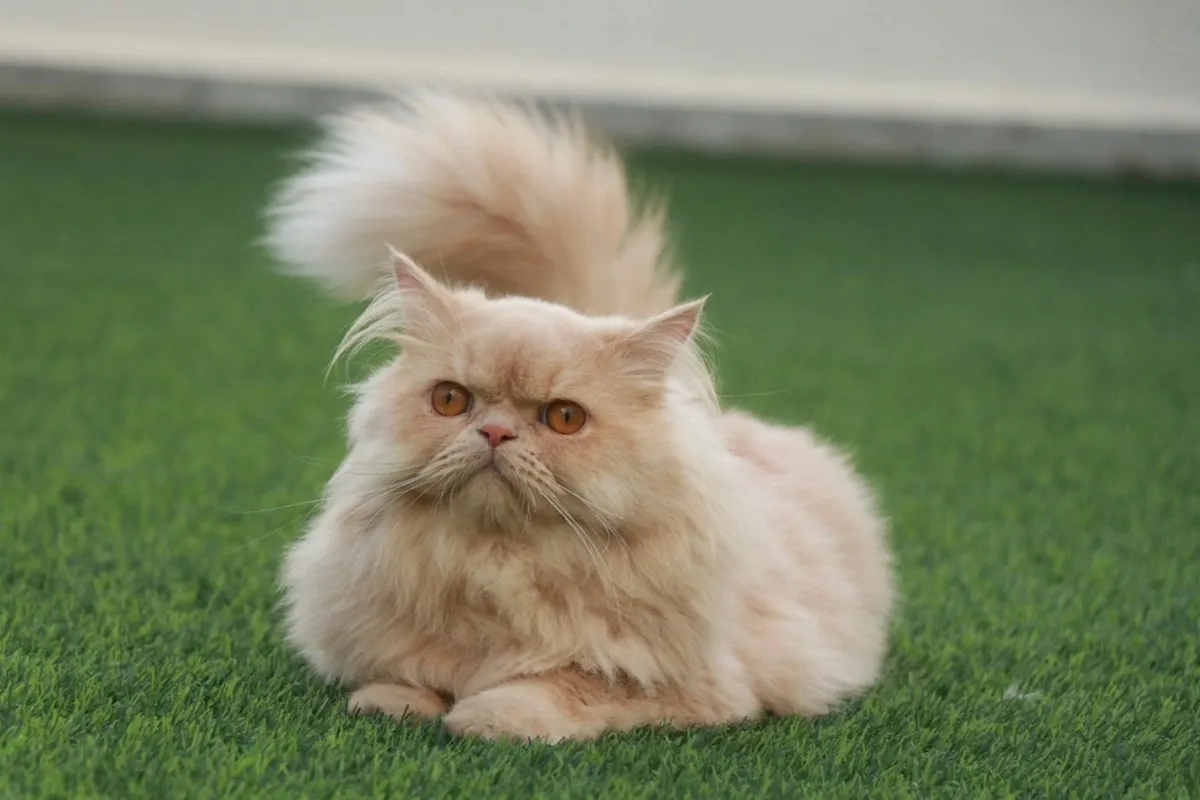
A modern Persian cat with a short, flat face.
Doll Face Persian Cat
The doll face Persian cat has a short but visible muzzle and a nose that sits clearly below the eyes. This is the original look of the breed, which is why it is also called the traditional Persian cat. Breathing is easier, and tear staining is usually milder.
Modern Persian Cat
The modern Persian cat, often called the flat-faced or show Persian, has a very short nose placed level with the eyes. Its forehead, nose and chin line up almost vertically. This is the type you see winning at cat shows today.
Peke Face Persian Cat
The peke face Persian cat is named after the Pekingese dog. It began as a natural mutation in red and red tabby Persians in the 1950s, with a pushed-in nose and a deep brow fold. Health problems made it unpopular, and true peke faces are very rare now.
| Feature | Doll face | Modern | Peke face |
|---|---|---|---|
| Nose position | Below the eyes | Level with the eyes | Between or above the eyes |
| Muzzle | Short, visible | Very short | Almost none |
| Breathing | Easiest | Can be noisy | Often difficult |
| Tear staining | Mild | Common | Heavy |
| Show recognition | Pet and some registries | Current CFA standard | Rarely bred today |

A doll face Persian with the classic, traditional look.
Traditional Persian Cat vs Modern Persian Cat
The traditional Persian cat looks much like the Persians shown at London’s Crystal Palace cat show in 1871. Over the next century, breeders selected for flatter faces, and by the 1980s the modern Persian cat had become the show standard.
Both share the same gentle nature, so the choice comes down to health and lifestyle. A traditional or doll face Persian suits most families because it breathes more easily, handles warm weather better and needs less daily eye cleaning.
A modern Persian is the right pick if you plan to show your cat or love the classic “pansy” face, but you should budget more time for grooming and vet care.
Persian Cat Breeds With Pictures
Beyond face shape, several well-known Persian cat breeds and variants come up again and again. Here are the ones you will meet most often, with pictures to help you spot them.
Himalayan Persian
The Himalayan was created in the 1950s by crossing Persians with Siamese cats. It has a pale body, darker points on the face, ears, paws and tail, and bright blue eyes.
The CFA folded it into the Persian breed as a color division in 1984, so a Himalayan is a true Persian with a color-point coat.
- Blue eyes in every Himalayan
- Points in seal, blue, flame and more
- Same calm Persian temperament

Himalayan Persian: a pale coat, darker points and blue eyes.

A silver-white Persian with green eyes, the classic Chinchilla look.
Chinchilla Persian
The Chinchilla Persian has a white undercoat with black-tipped hairs that give it a shimmering silver look, plus green or blue-green eyes outlined in black. Many have a slightly longer nose than show Persians.
Exotic Shorthair
Often called the “Persian in pajamas,” the Exotic Shorthair has the Persian face and body with a short, plush coat. It came from crossing Persians with American Shorthairs and was recognized by the CFA in 1966.
Teacup Persian
“Teacup” or miniature Persians are simply bred to be small. No major registry recognizes them, and extreme small size can bring health problems, so treat this label with caution.
Persian Cat Colors and Patterns
The CFA groups Persian colors into seven divisions. Each one can appear in any face type.
Best Persian Cat Breeds for Your Home
There is no single winner, but these are the best Persian cat breeds for common situations:
| If you want… | Best choice |
|---|---|
| A healthy family pet | Doll face (traditional) Persian |
| A show cat | Modern Persian |
| Striking blue eyes | Himalayan Persian |
| Less grooming | Exotic Shorthair |
| A glamorous silver coat | Chinchilla Persian |
Persian Cat Health and Care
Every Persian needs daily brushing, regular eye cleaning and an indoor life. The flatter the face, the more care it needs.
Health tip: Polycystic kidney disease (PKD) is inherited in Persians. Ask the breeder for DNA test results for both parents. Flat-faced cats can also have breathing, dental and eye problems linked to brachycephaly, so regular vet checks matter.
Persian Cat Breeds FAQs
How many types of Persian cats are there?
There are three face types (doll face, modern and peke face) and seven CFA color divisions, plus related variants such as the Himalayan and Exotic Shorthair.
What is the difference between a doll face and a peke face Persian?
A doll face Persian has a visible muzzle with the nose below the eyes. A peke face Persian has an extremely flat face with the nose between or above the eyes.
Is a traditional Persian cat healthier than a modern one?
In general, yes. A longer nose usually means easier breathing and fewer eye problems, but every kitten should still come from health-tested parents.
Which is the best Persian cat breed for families?
The doll face Persian is the best fit for most families thanks to its easier care, calm nature and fewer face-related health issues.
Are Himalayans and Exotics true Persian cat breeds?
The CFA treats the Himalayan as a Persian color division. The Exotic Shorthair is a separate breed built on the Persian, with a short coat.
Final Thoughts
Persian cat breeds all come from one gentle, long-haired cat, but the face shape, color and variant you choose shape everything from grooming to vet bills. For most homes, a doll face Persian from health-tested parents is the safest start. Keep exploring Bengal Cat Info for more honest, easy-to-read cat breed guides.